Where Art Meets Appetite in the Heart of West Africa
You know that feeling when a place just surprises you? Ouagadougou did that to me. I went for the art—vibrant murals, bold sculptures, creative energy everywhere—but stayed for the food culture that pulses through the city like a heartbeat. Here, every meal feels like a masterpiece, and every market stall is its own gallery. This is more than travel; it’s a sensory fusion of flavor and form. The city does not shout its beauty; it hums it, softly at first, then growing louder in the clatter of pestles in mortars, the sizzle of plantains in oil, the laughter woven through open-air kitchens. In Ouagadougou, creativity is not reserved for galleries. It spills into the streets, where color, scent, and sound converge into a living exhibition anyone can walk through and taste.
First Impressions: A City That Paints with Flavor
Arriving in Ouagadougou, one is immediately struck not by grand monuments, but by the rhythm of life unfolding in vivid detail. The airport road unfolds into a mosaic of red laterite soil, bougainvillea spilling over walls in magenta bursts, and moto-taxis weaving through traffic like brushstrokes on a canvas. The city breathes in color—indigo-dyed fabrics flapping in the wind, children in bright school uniforms, and hand-painted signs advertising everything from phone credit to herbal remedies. This visual energy is not accidental; it reflects a culture deeply attuned to aesthetic expression in the everyday.
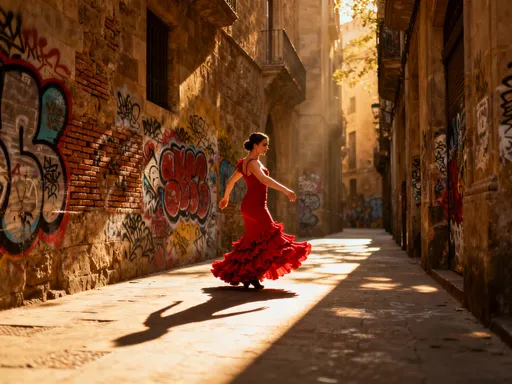
Within minutes of stepping into the city center, the senses are enveloped by a symphony of smells: wood smoke, grilled meat, roasting peanuts, and the tang of fermented corn. These are the notes of Ouagadougou’s culinary overture, played daily in open-air kitchens and roadside grills. The city’s street art—murals depicting historical figures, social messages, and abstract designs—does more than decorate. It sets a tone of creative urgency, inviting residents and visitors alike to see beauty as both personal and public. Graffiti here is not rebellion; it is conversation, a way of claiming space and identity in a rapidly evolving urban landscape.
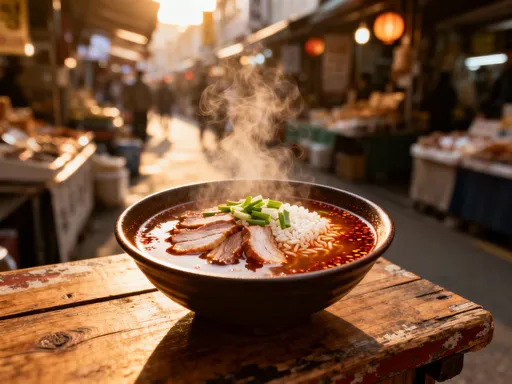
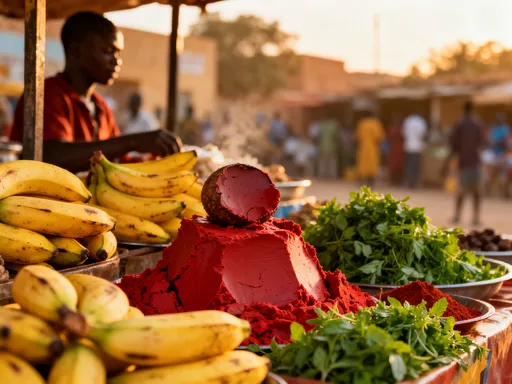
And then, the markets appear—vast, pulsing, alive. The first encounter with a food market in Ouagadougou is not just shopping; it is immersion. Vendors arrange mounds of millet, sorghum, and rice in concentric circles, their golden grains catching the sun. Piles of dried fish are fanned out like feathers, each piece meticulously sorted by size and species. Spices are displayed in rainbow gradients: yellow turmeric, red chili, earthy ginger. The presentation is deliberate, almost ceremonial. There is an unspoken understanding that food is not only sustenance but spectacle, and every vendor is, in their own way, a curator of culture.
The Art of the Everyday: How Food Stalls Become Canvases
In Ouagadougou, a food stall is more than a place to eat—it is a stage. Watch any vendor preparing a meal, and you will see a performance unfold. A woman shapes balls of dough with swift, practiced hands, her fingers moving like a sculptor refining clay. Another arranges grilled fish on a bed of sliced tomatoes and onions, layering colors with the precision of a painter. The oil glistens under the sun, the herbs are sprinkled with care, and the final plate is presented not just to feed, but to impress. This is culinary artistry in motion, where function and form are inseparable.
The aesthetic care in food presentation is not limited to special occasions. It is embedded in daily life. Even the simplest roadside meal—grilled corn dusted with chili and lime—is served on a small wooden tray, often accompanied by a folded napkin or a sprig of fresh mint. The use of symmetry, balance, and contrast is instinctive. A bowl of rice might be ringed with alternating portions of stew and vegetables, creating a visual rhythm that mirrors the flavors within. These arrangements are not dictated by trend or Instagram—they arise from a deep cultural appreciation for harmony and respect for the ingredients.
There is also a performative dimension to cooking in Ouagadougou. The rhythmic pounding of a mortar and pestle is both practical and poetic, a sound that echoes through neighborhoods in the early morning. Vendors call out their offerings with melodic cadence, turning commerce into song. When a pot of sauce begins to simmer, the steam rises like a curtain lifting on a new act. Customers gather not just to eat, but to witness—the sizzle of meat on a hot plate, the flick of a wrist as dough is flattened, the final flourish of garnish. In this context, the kitchen is not hidden away; it is the centerpiece, and the cook, the artist.
Markets as Museums: Exploring Bobo-Dioulasso Road Market
Nowhere is this fusion of art and nourishment more evident than in the Bobo-Dioulasso Road Market, one of Ouagadougou’s largest and most vibrant. Spanning several blocks, the market is a living archive of Burkinabé life, where every stall tells a story. As you walk through the shaded alleys, the air thick with the scent of dried fish, smoked meat, and crushed shea nuts, you begin to see the space not as a marketplace, but as a curated exhibition. Each vendor has transformed their corner into a display of texture, color, and tradition.
One section is dedicated to shea butter, a staple of both cuisine and skincare. Blocks of pale, creamy butter are stacked like art objects, some wrapped in banana leaves, others stamped with the maker’s mark. Women sit beside them, offering samples with a smile, explaining how the butter is hand-extracted from nuts gathered in the surrounding savannah. Their words are rich with pride—this is not just a product, but a legacy, passed from mother to daughter. Nearby, baskets overflow with dried okra, smoked guinea fowl, and bundles of aromatic herbs used in traditional sauces. Each ingredient is arranged with intention, some fanned out in fans, others piled in pyramids, as if defying gravity through beauty alone.
The spice vendors are particularly striking. Their tables resemble palettes, with small mounds of ground peppers, cloves, and dried baobab leaves arranged in a spectrum of earth tones. Some mix their own blends, grinding spices on the spot with a hand mill, releasing clouds of fragrance that drift into the breeze. A vendor might describe the heat of a particular chili not just in terms of Scoville units, but in memory: “This one comes from my aunt’s garden in the north. She says it warms the blood like the midday sun.” These descriptions are not sales tactics—they are oral histories, shared between strangers as easily as recipes.
Children weave through the aisles, carrying trays of water or bread, while elders sit on low stools, observing the flow of commerce with quiet satisfaction. The market is not just a place to buy and sell; it is a social canvas, where relationships are formed, news is exchanged, and culture is reaffirmed. To walk through it is to experience a different kind of museum—one without glass cases, where every object is alive, touched, tasted, and treasured.
Flavors with a Story: Traditional Dishes as Cultural Narratives
In Burkina Faso, food is memory. Dishes like tô with sauce gombo, riz gras, and foufou are more than meals—they are edible heirlooms, carrying the weight of history and the warmth of home. Tô, a stiff porridge made from millet or sorghum, is a daily staple, often served in a large communal bowl. It is eaten with the right hand, rolled into small balls and dipped into a rich, vegetable-laden sauce. The sauce—often made with okra, tomatoes, onions, and leafy greens—varies by region and season, each version a reflection of local soil and tradition.
What makes these dishes truly powerful is not just their taste, but the way they are passed down. Recipes are rarely written; they are learned through doing, through watching a grandmother stir a pot, through the rhythm of pounding grain at dawn. A mother might teach her daughter how to adjust the thickness of tô by touch, or how to balance the sourness of baobab leaves with a pinch of salt. These skills are not just culinary—they are cultural transmissions, ensuring that identity is preserved one meal at a time.
During a visit to a family compound on the outskirts of the city, I had the privilege of joining a cooking session that felt more like a ritual than a lesson. The women began at sunrise, grinding millet with stone tools, their movements synchronized like dancers. Water was added slowly, the dough kneaded with steady pressure. Meanwhile, the sauce simmered over a wood fire, its aroma deepening with each hour. As the meal came together, stories were shared—of droughts overcome, of weddings celebrated, of ancestors remembered. The act of cooking became a form of storytelling, where every ingredient carried meaning, and every step was an act of remembrance.
Even the way the meal is served reinforces its cultural significance. Diners sit together on mats, often in a circle, sharing from a single bowl. There is no hierarchy in seating, no individual plates—only community. The eldest may be served first, but all eat from the same source, a practice that embodies unity and mutual care. In this setting, food is not just fuel; it is a language of belonging, spoken through shared silence, laughter, and the simple act of passing the bowl.
Creative Fusion: Contemporary Cafés and Art Spaces Reinventing Cuisine
While tradition remains strong, Ouagadougou is also witnessing a quiet revolution—one where young artists and chefs are reimagining the relationship between food and art. In neighborhoods like Ouaga 2000 and the Diplomatic Zone, a new generation of creatives is opening cafés and galleries that blend visual exhibitions with culinary innovation. These spaces are not just restaurants; they are cultural laboratories, where Burkinabé flavors are reinterpreted with modern technique and global awareness.
One such venue, a small gallery-café near the Institut Français, hosts monthly art shows featuring local painters and sculptors. But the walls are not the only attraction. The menu changes with each exhibition, drawing inspiration from the themes and colors on display. A series on desert landscapes might inspire a dish of grilled lamb with cumin and dried mango, served on a plate painted with sand-like textures. Another evening, dedicated to textile art, features a meal wrapped in banana leaves, echoing the folds and patterns of traditional weaving. Here, dining is an immersive experience, where taste, sight, and thought are intertwined.
These spaces are also incubators for new ideas. A young chef might experiment with fermenting local grains to create sourdough bread using indigenous yeast, or infuse shea butter into desserts for a nutty, earthy depth. Another might pair riz gras—a rich rice dish cooked with tomatoes, onions, and meat—with a modern plating style, using negative space and edible flowers to elevate its presentation. These are not attempts to “improve” tradition, but to expand its vocabulary, showing that heritage can evolve without losing its soul.
Music often accompanies these experiences, with live performances of traditional kora or modern Afro-jazz. The atmosphere is relaxed but intentional, a space where creativity flows freely across disciplines. For the youth behind these initiatives, food is not separate from art—it is art, deserving of the same respect, innovation, and platform. In doing so, they are creating a new cultural narrative, one where Ouagadougou is not just preserving its past, but actively shaping its future.
The Rhythm of Shared Meals: Food as Communal Performance
In Ouagadougou, eating is never just about consumption. It is a performance, a ritual, a social act that binds people together. Whether in a family courtyard, a market stall, or a neighborhood gathering, meals are communal by design. People sit close, often on the ground, sharing from large bowls placed in the center. There is no rush, no distraction from screens or schedules—only the presence of others, the warmth of conversation, and the rhythm of hands shaping food.
This practice mirrors the collaborative nature of Burkinabé art. Just as a mural might be painted by several artists working in harmony, a meal is prepared and enjoyed as a collective effort. One person stirs the pot, another fetches water, a child passes bowls. Everyone has a role, and no one is excluded. The act of eating with hands reinforces this intimacy—it requires slowness, mindfulness, and a tactile connection to the food. There is no barrier between plate and person; the meal is absorbed not just physically, but emotionally.
Hospitality in Ouagadougou follows an unspoken code. Guests are offered the best portion, often with a gentle insistence. Refusing food can be seen as a rejection of care. A host might say, “Eat, so that your heart is full,” not as a polite gesture, but as a genuine wish for well-being. This generosity is not limited to family—it extends to strangers, neighbors, and travelers. To be invited to a meal is to be welcomed into a circle of trust, a moment of shared humanity.
There is also a quiet elegance in these gatherings. The way a bowl is passed, the way laughter rises and falls with the rhythm of chewing, the way silence can be just as meaningful as speech—all contribute to a kind of social choreography. It is in these moments that culture is most alive, not in monuments or museums, but in the simple, repeated act of breaking bread together. Food, in this context, becomes a medium of connection, a way of saying, without words, “You belong here.”
Why This Matters: Preserving Culture Through Taste and Vision
In an age of globalization, where homogenization threatens local traditions, Ouagadougou stands as a quiet testament to the power of cultural resilience. Here, art and food are not separate domains—they are intertwined expressions of identity, each reinforcing the other. When a mural depicts a woman carrying a basket of millet, it honors both the visual and the culinary. When a chef presents a dish with the care of a painter, they affirm that tradition is not static, but dynamic, capable of renewal.
This fusion is not merely aesthetic; it is essential. In preserving the way food is grown, prepared, and shared, the people of Ouagadougou are also safeguarding language, history, and community values. Each recipe is a chapter in a larger story, each market a living archive. When young artists draw inspiration from these traditions, they ensure that culture does not fade into memory, but continues to evolve in real time.
Supporting local creators—whether painters, chefs, or farmers—is not just an economic act, but a cultural one. Every meal eaten at a family-run stall, every artwork purchased from a street vendor, strengthens the fabric of this ecosystem. Tourism, when done respectfully, can play a role in this preservation, offering both visibility and sustainability. But the true guardians are the people themselves—the women who rise before dawn to cook, the elders who remember forgotten recipes, the youth who dare to reimagine what tradition can be.
Ouagadougou is not a city frozen in time. It is alive, breathing, changing. Yet in its markets, its homes, its art spaces, there is a deep commitment to keeping the essence of Burkinabé culture intact. This is not resistance to progress, but a redefinition of it—one where modernity does not erase the past, but builds upon it with reverence and creativity.
Ouagadougou taught me that culture doesn’t live in museums alone. It’s in the way a woman folds dough under the morning sun, the way paint drips on a wall beside a spice stand, the way flavor and form feed each other. To taste here is to witness art in motion—and to leave changed, hungry for more than just food.