Hidden Art Trails Beyond the Castle Walls
Tucked along the Vltava River, Cesky Krumlov is more than a fairy-tale town frozen in time—it’s a living canvas. While most visitors wander its cobbled lanes and baroque theatre, I discovered something unexpected: art spaces blooming off the beaten path, accessible only by foot. Hiking here isn’t just about views—it’s a journey through creativity, nature, and quiet corners where inspiration still breathes. Away from the postcard-perfect facades, the hills and riverbanks whisper stories of artists who’ve chosen solitude over spectacle, embedding their work into the landscape itself. This is not tourism as usual, but a deeper form of connection—one where every trail leads not only to a vista, but to a moment of artistic revelation.
Why Hiking Unlocks a Different Side of Cesky Krumlov
Cesky Krumlov, nestled in the rolling hills of South Bohemia, holds UNESCO World Heritage status for its remarkably preserved medieval and baroque architecture. Its narrow alleys, red-roofed buildings, and the towering castle complex draw over a million visitors annually, many of whom experience the town as a beautifully curated museum. Yet beyond the central square and the well-trodden paths to the castle, a quieter, more intimate version of the town unfolds—one shaped by nature and nurtured by creative minds. Hiking offers a rare opportunity to step beyond the curated image and discover Cesky Krumlov as a living, evolving cultural landscape.
The contrast between the bustling town center and the serene outskirts is striking. While the main streets buzz with tourists, cafes, and souvenir shops, just a short walk from the riverbanks, the noise fades into birdsong and rustling leaves. It is here, in these transitional zones between settlement and wilderness, that art begins to emerge—not in grand galleries, but in subtle, often unexpected forms. Local painters, sculptors, and installation artists have long been drawn to the region’s natural beauty, finding in its forests, meadows, and forgotten ruins a source of both inspiration and exhibition space.
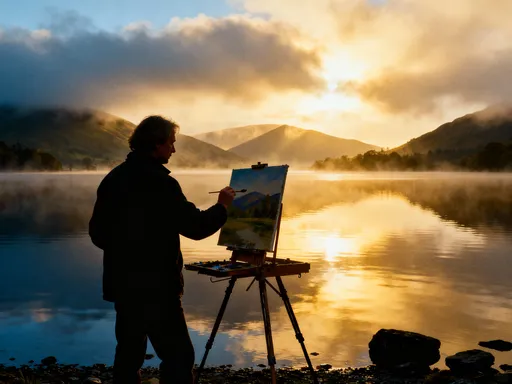
South Bohemia has always had a deep connection between art and environment. The soft light filtering through autumn mist, the way the Vltava winds around rocky outcrops, the silence of pine-covered slopes—these are not just scenic elements but active participants in the region’s creative identity. Artists respond to the land, and in turn, their work enhances it. Hiking through these areas allows visitors to witness this dialogue firsthand, experiencing art not as a static object behind glass, but as a dynamic presence woven into the terrain. It is a reminder that culture does not exist in isolation; it grows from the soil, the seasons, and the quiet moments of observation.
The Green Belt: Nature Paths with a Creative Pulse
Encircling Cesky Krumlov like a living frame, the Green Belt is a network of walking and hiking trails that follow the natural contours of the Vltava River and the surrounding woodlands. These paths are more than recreational routes—they serve as open-air corridors for artistic expression. Managed in part by local conservation groups and cultural initiatives, the Green Belt has become a designated space where nature and creativity coexist in harmony. Along its routes, hikers encounter small-scale installations, hand-painted signs, woven sculptures, and seasonal exhibits that change with the rhythm of the year.
One of the most frequented loops begins at the northern edge of town, following the river upstream through alder groves and meadow clearings. Here, in spring, wooden frames hold temporary watercolor displays protected under glass canopies, each piece responding to the seasonal flood patterns of the river. In summer, local ceramicists place small, weather-resistant sculptures along the path—abstract forms inspired by fish, reeds, and flowing water. These works are not permanent; they are meant to weather, degrade, or be replaced, reflecting a philosophy of impermanence that resonates deeply with the natural cycles of the region.
What makes the Green Belt particularly special is its accessibility and inclusivity. The trails are well-marked, mostly flat, and suitable for families, older adults, and casual walkers. At the same time, they offer enough variety and length—ranging from 3-kilometer strolls to 12-kilometer hikes—to satisfy more serious trekkers. Signage along the way provides brief descriptions of the artworks, often including QR codes that link to artist interviews or audio commentary, enriching the experience without disrupting the tranquility of the setting. This blend of low-impact art and thoughtful infrastructure makes the Green Belt a model for sustainable cultural tourism.
From Ruins to Canvases: Exploring Abandoned Spaces Turned Art Zones
On the fringes of Cesky Krumlov, where the cultivated landscape gives way to overgrown fields and crumbling stone walls, lie forgotten structures that have found new life as canvases for contemporary art. These are not official heritage sites, but rather the remnants of old farmsteads, disused barns, and collapsed outbuildings—spaces that, decades ago, were abandoned to the elements. In recent years, however, local artists and collectives have begun to reclaim them, transforming decay into dialogue through murals, sculptures, and site-specific installations.
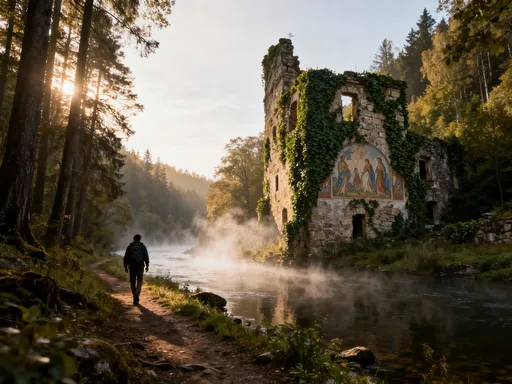
One such site, located about 4 kilometers southwest of the town center, was once a 19th-century dairy farm. Now, its crumbling stone walls are adorned with large-scale murals painted during annual community art weeks. Themes range from regional folklore to environmental awareness, with images of stags, river spirits, and endangered birds emerging from the moss-covered surfaces. The art here is not meant to restore the building, but to engage with its state of ruin, using cracks and weathering as integral parts of the composition. It is a powerful reminder that beauty and meaning can emerge from neglect, given the right vision.
Visitors are welcome to explore these spaces, but ethical guidelines are strongly encouraged. Many of these sites are on private land, though the owners have granted informal permission for public access as long as the integrity of the property is respected. Hikers are advised to stay on marked paths, avoid touching fragile surfaces, and refrain from leaving any trace of their visit. Some collectives, such as the South Bohemian Art Renewal Group, organize guided walks during the summer months, offering context and ensuring that visitation supports rather than harms the work. By honoring these boundaries, travelers contribute to a culture of care—one that values both artistic freedom and environmental responsibility.
Artist Residencies and Open Trails: Where Creation Meets the Wild
Just outside Cesky Krumlov, nestled in the forested hills, a growing number of artist residencies offer creative professionals from around the world the chance to live and work in close communion with nature. These programs, typically lasting from two weeks to three months, attract painters, writers, musicians, and interdisciplinary artists seeking solitude and inspiration. What makes them unique is their openness to the public—many residencies organize monthly open days, during which hikers can walk the trails leading to the studios and view works-in-progress, attend small outdoor performances, or participate in informal workshops.
One of the longest-running programs, the Vltava Creative Retreat, occupies a restored forestry cabin deep in the woods. Artists here are encouraged to respond to their surroundings, using natural materials, soundscapes, and seasonal changes as part of their practice. In summer, visitors might stumble upon a sound installation triggered by wind chimes made from river stones, or a textile piece woven from foraged flax and displayed on a wooden loom under the trees. These moments of surprise and discovery are central to the residency’s philosophy: art should not be confined, but allowed to breathe in the open air.
Seasonal events further deepen public engagement. Each June, the region hosts the Art in the Open festival, a week-long celebration that connects multiple residencies through a network of hiking trails. Participants receive a map marking studio stops, outdoor exhibitions, and pop-up performance sites. Similarly, in October, the Autumn Studio Tour invites visitors to explore artists’ spaces during the golden hours of late afternoon, when the light filters through the turning leaves in breathtaking hues. These events not only support the artists financially but also foster a sense of community between creators and the public, reinforcing the idea that art is not a distant elite pursuit, but a shared, lived experience.
Practical Hiking Routes That Lead to Art Encounters
For those eager to explore Cesky Krumlov’s hidden art trails, a few well-established routes offer both scenic beauty and cultural enrichment. The first, known as the River North Loop, begins at the pedestrian bridge near the town’s northern gate and follows the Vltava upstream for approximately 6 kilometers. This gently graded path passes through riverside meadows, crosses small wooden footbridges, and skirts the edge of a protected wetland. Along the way, hikers will encounter several art installations, including a kinetic sculpture powered by river currents and a series of poetry stones engraved with verses in Czech and English. The entire loop takes about 2.5 hours at a leisurely pace and is ideal for early morning or late afternoon walks when light enhances the colors of the landscape.
A more challenging option is the Castle Ridge Trail, which ascends the forested hill behind Cesky Krumlov Castle. Starting from the eastern edge of the town, this 8-kilometer route gains about 300 meters in elevation, offering panoramic views of the town and river bends below. Midway up the trail, hikers reach a clearing where a rotating sculpture garden has been established by the Bohemian Sculpture Collective. Works here are changed every six months and are designed to withstand weather while interacting with the surrounding trees and rock formations. The path continues to a disused watchtower, now repurposed as a temporary exhibition space for landscape photography and sound art. Due to its incline, this trail is best attempted in good weather with sturdy footwear, and it is especially rewarding in autumn when the forest is ablaze with color.
A third option, perfect for families or those seeking a shorter experience, is the Meadow Art Walk, a 3-kilometer loop through open fields just east of the town. This route is stroller-friendly and features child-oriented installations such as painted boulders, interactive wind sculptures, and a small labyrinth made from native shrubs. Informational panels along the way explain the ecological and artistic significance of each piece, making it an excellent educational outing. Regardless of the chosen path, hikers are encouraged to carry water, wear layers, and bring a small notebook or camera to capture impressions. Many find that combining a picnic with an art trail enhances the experience, turning a simple walk into a full day of sensory and emotional nourishment.
Supporting Local Art Through Responsible Tourism
As interest in Cesky Krumlov’s off-grid art scene grows, so does the responsibility to engage with it mindfully. Unlike commercial galleries, many of these artistic initiatives operate on minimal budgets, sustained by passion, volunteer work, and small donations. Hikers who wish to support the culture they encounter have several meaningful options. Some installations include donation boxes with transparent funding goals—such as “Help us restore the 1890s barn for next season’s residency.” Contributing even a few euros can make a tangible difference.
Another way to support artists is by purchasing small works or limited-edition prints, which are often available at open studio events or through local cafes that partner with creators. These items—hand-painted postcards, ceramic ornaments, or linen booklets of poetry—are not only beautiful mementos but direct investments in the local creative economy. Additionally, visitors are encouraged to extend their journey into the town’s official galleries, such as the Egon Schiele Art Centrum, where proceeds support educational programs and community outreach. This creates a balanced cycle: discovery in nature, appreciation in curated spaces, and financial support that ensures continuity.
Responsible tourism also means respecting the environment that makes this art possible. Staying on trails, avoiding litter, and minimizing noise preserve the serenity that artists and hikers alike cherish. Many of the artworks are fragile or temporary, designed to coexist with wildlife and seasonal changes. By practicing eco-conscious behavior, visitors help maintain the delicate balance between access and preservation. In this way, hiking becomes more than recreation—it becomes an act of stewardship, a quiet promise to protect the spaces where creativity still grows wild.
Beyond the Frame: Why This Journey Stays With You
The art trails of Cesky Krumlov offer something increasingly rare in the age of fast travel and digital saturation: a chance to move slowly, observe deeply, and connect authentically. Unlike the checklist tourism of ticking off landmarks, this experience invites immersion. It asks the traveler to pause, to notice the way light hits a painted stone, to listen to a wind-activated chime in the trees, to feel the texture of a sculpture shaped by hands that sought harmony with the land. These moments linger, not as photographs in a gallery, but as sensory imprints on the soul.
What makes this journey enduring is the synergy between art and nature. Each enhances the other—the landscape gives context to the work, and the work deepens appreciation for the landscape. In a world where both are often commodified or exploited, Cesky Krumlov’s quiet hills stand as a sanctuary. Here, creativity is not a product, but a process; not a spectacle, but a conversation. It reminds us that beauty does not always announce itself with fanfare. Sometimes, it waits in silence, just beyond the castle walls, for those willing to walk a little farther.
To those who seek meaning in their travels, this is an invitation: leave the crowded lanes, step onto the trail, and let the land guide you. Let the rustle of leaves be your soundtrack, the changing light your gallery curator. Discover art not as an object to be consumed, but as a presence to be encountered. In doing so, you may find not only the soul of a place, but a deeper connection to your own. Cesky Krumlov, in all its quiet brilliance, offers a path not just through the countryside, but toward a more mindful, inspired way of being.