From Scattered Snapshots to Meaningful Journeys: How Travel Memories Quietly Shape Who We Are
Remember that stack of unsorted photos from your last trip? You’re not alone. Most of us collect moments like souvenirs—beautiful, but disconnected. What if those memories could do more than just sit in a phone album? I used to feel like my travels left no real mark—until I started tracking them differently. It wasn’t about posting online or chasing destinations. It was about noticing how each journey quietly changed the way I see myself. This is how simple record-keeping became a mirror for growth.
The Hidden Weight of Unseen Journeys
How many times have you come home from a trip feeling… nothing? Not tired, not sad—just empty. You had the perfect itinerary, took dozens of photos, maybe even splurged on a nice dinner. But as the days pass, the excitement fades, and all that’s left is a vague sense of, “Well, that was nice.” I’ve been there. More than once. And I used to think it was just me—maybe I wasn’t adventurous enough, or maybe I didn’t appreciate the moment while I was in it. But over time, I realized the problem wasn’t me. It was how I was treating my memories.
We treat travel like a checklist. Book the flight. Visit the landmark. Take the photo. Post it. Move on. But when we don’t pause to reflect, to really *feel* what happened, the experience becomes like a beautiful shell—smooth on the outside, hollow inside. I remember returning from a trip to Portugal, scrolling through hundreds of pictures, and realizing I couldn’t recall what I’d eaten the night before, what the air smelled like in that quiet alley, or how I felt when I stood at the edge of the ocean for the first time. The photos were there, but the meaning was gone.
And that’s the quiet tragedy of modern travel. We go further, faster, more often than ever before—but we’re not absorbing it. We’re not letting it change us. The destinations pile up, but the inner transformation lags behind. It’s like filling a closet with clothes you never wear. The space is full, but you still feel underdressed. What if, instead of just collecting moments, we started *keeping* them? Not for an audience, but for ourselves. What if we allowed our journeys to speak to us—not just as stories to tell, but as clues to who we’re becoming?
How a Simple Travel Log Became My Personal Compass
The shift started small. One summer, I bought a little notebook—nothing fancy, just a lined journal from the bookstore. I decided I’d write one paragraph each night of my trip to Greece. Just a few sentences. What I saw. What I felt. What surprised me. I didn’t expect much. But that first entry, written on a balcony overlooking the sea, changed something. I wrote about how nervous I’d been boarding the plane alone, how I’d worried about getting lost, about not speaking the language. And then, that afternoon, I’d asked for directions in broken Greek and laughed when the old man at the kiosk gently corrected my pronunciation. I wrote, “I didn’t understand much. But I wasn’t afraid.”
Months later, when I was reading through that journal during a stressful time at work, that line stopped me. “I wasn’t afraid.” I had forgotten that moment completely—until I saw it on the page. And suddenly, it wasn’t just about travel anymore. It was about courage. It was about how I’d handled uncertainty before, and how I could do it again. That journal became more than a record. It became a mirror.
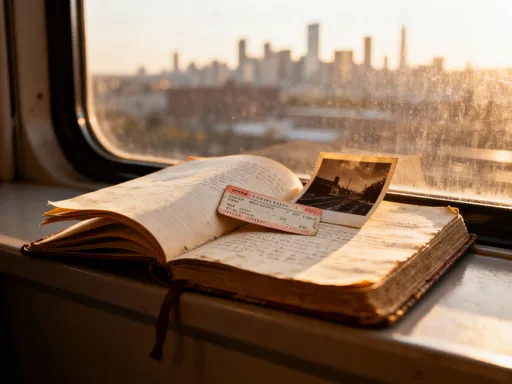
From then on, I kept going. I didn’t write every night. Sometimes I used my phone to jot down a note. Other times, I recorded a short voice memo while walking back to my hotel. I saved receipts, ticket stubs, even napkins with scribbled notes. Nothing was too small. And slowly, a pattern emerged. I started noticing how often I wrote about feeling surprised by kindness—from strangers, from myself. How many times I mentioned feeling more capable than I expected. How, on solo trips, I made decisions faster, trusted my gut more. These weren’t grand epiphanies. They were quiet whispers. But together, they formed a kind of map—not of where I’d been, but of who I was becoming.
The technology was simple. A notebook. A phone. A cloud folder. But the impact wasn’t. Because for the first time, I wasn’t just traveling to escape. I was traveling to *see*—myself, my strengths, my growth. And the log wasn’t a chore. It was a conversation. With me. With my past self. With the woman I was trying to become.
The Quiet Power of Progress Tracking (Without the Pressure)
We’re used to tracking things that feel measurable—steps, calories, money saved. But what about the softer shifts? The way you speak up more after a trip where you had to advocate for yourself? The way you feel calmer in chaos after navigating a delayed flight in a foreign airport? These aren’t things you can graph, but they’re real. And they matter.
When I started reviewing my travel logs regularly—not daily, not even monthly, but every few months—I began to see changes I hadn’t noticed in real time. In one entry from three years ago, I wrote about feeling overwhelmed ordering coffee in Paris because I didn’t know the menu. Last year, in Morocco, I haggled at a market with a smile, completely at ease. I didn’t realize how much more confident I’d become until I read those two moments side by side.
That’s the beauty of tracking: it makes the invisible visible. It shows you not just where you’ve been, but how you’ve grown. And the best part? There’s no pressure. No leaderboard. No “perfect traveler” trophy. You’re not trying to beat anyone. You’re not even trying to beat your past self. You’re just noticing. And in that noticing, something powerful happens. You start to trust yourself more. You realize, “Oh. I’ve done hard things before. I can do them again.”
One friend of mine uses a simple method: every New Year, she looks back at her travel photos and picks three moments that made her feel proud. Not the most beautiful sunset, but the moments where she stepped outside her comfort zone. Last year, it was hiking alone at dawn, asking for help when she got turned around, and trying a dish she thought she’d hate (and loving it). She calls it her “quiet courage review.” And every time she does it, she feels stronger going into the new year. That’s progress. Not loud. Not flashy. But real.
Building Emotional Bridges Between Trips and Daily Life
One of the biggest myths about travel is that it’s separate from “real life.” As if the person who orders wine confidently in Italy isn’t the same one who hesitates during a team meeting back home. But the truth is, those versions of you are the same. The challenge is remembering that.
I used to feel like my travel self was a different person—bolder, more present, more open. Then I’d return home and slip back into old patterns. But when I started connecting my travel memories to my daily routines, something shifted. I began using those memories as anchors. On days when I felt insecure at work, I’d pull up a photo from Kyoto, where I’d navigated a complex train system with zero language skills. I’d remind myself, “You figured that out. You can figure this out too.”
Technology made this easier. I created a digital album labeled “Courage Moments” and added photos, voice notes, even short videos—anything that captured a time I’d surprised myself. Now, when my daughter is nervous about trying out for soccer, I show her that album. We look at the picture of me standing at the top of a cliff in Santorini, terrified of the view but smiling anyway. “Mom was scared too,” I tell her. “But she did it.” It’s not just about me anymore. It’s about showing her—and myself—that growth is possible.
Another friend uses voice recordings. After a trip, she records a short reflection: what she learned, how she changed, what she wants to carry home. She listens to it once a month. “It’s like getting advice from my best self,” she says. And that, I think, is the heart of it. Travel doesn’t have to end when the trip does. With a little intention, it can keep giving—long after the suitcase is unpacked.
Making It Effortless: Tools That Work With Your Life, Not Against It
Let’s be honest—most of us don’t want another task. We’re not looking for a complicated system or a new app that demands daily check-ins. What we need are tools that feel natural, almost invisible—like a quiet helper who tidies up while you live your life.
That’s why I love simple, automatic features. For example, I let my phone’s photo library organize images by location and date. I don’t have to do anything—just keep taking pictures. Later, when I want to revisit a trip, everything is already grouped. I can scroll through a weekend in Charleston like flipping through a storybook. No tagging. No sorting. Just memory.
Some apps send gentle prompts. “You’re in Barcelona—want to write a quick note about your day?” I don’t always respond, but when I do, it takes less than a minute. Other times, I use voice-to-text while walking. I’ll say, “Today, the market smelled like citrus and bread. A woman gave me a free sample of cheese and called me ‘cariño.’ I felt like I belonged.” Later, I paste that into a note. It’s not polished. It’s real.
One of my favorite tools is a digital journal that syncs across devices. I can start an entry on my phone, finish it on my tablet. I add photos, weather data, even music I was listening to. It’s not about perfection. It’s about preservation. And the best part? It doesn’t ask for much. Five minutes here, a voice note there. Over time, it builds something beautiful—without ever feeling like a burden.
Sharing Stories That Deepen, Not Perform
Social media taught us to share travel as performance—perfect lighting, curated captions, the “best of” reel. But real connection doesn’t come from perfection. It comes from honesty. From saying, “I was scared,” or “This moment changed me,” or “I didn’t want to leave.”
Now, I share differently. Instead of posting every meal, I send a monthly recap to my sister. Just a few photos, a short note. “This was my favorite quiet moment,” or “This is where I laughed the hardest.” She does the same. It’s become our ritual—a way to stay close, even when we’re far apart.
With my kids, I create simple digital scrapbooks after trips. We add photos, stickers, short recordings of us talking about the day. Last summer, we made one for our beach week. My daughter recorded herself saying, “Today I built a sandcastle taller than me!” We watch it together sometimes, and she beams. It’s not about the castle. It’s about the pride. The memory. The bond.
And with my partner, we have a shared album called “Us, Out There.” We add moments that felt meaningful—the quiet breakfast in Vienna, the rainy hike where we got soaked but didn’t care. No filters. No captions. Just us. When life gets busy, we open it and remember: we’ve built something beautiful, one journey at a time.
The Ripple Effect: How Tracking Journeys Enriches More Than the Self
I used to think keeping travel records was a selfish act—something just for me. But over time, I’ve seen how it touches others in ways I never expected. My journal isn’t just a personal archive. It’s become a gift.
Last year, my niece was planning her first solo trip. She was nervous—about safety, about loneliness, about making mistakes. I gave her a copy of my travel log from my first solo journey. Not the polished version. The real one. With the doubts. The tears. The moments I wanted to go home. And the moments I stayed. She read it and said, “It made me feel less alone.” That meant more than any five-star review ever could.
My kids love hearing stories from my trips, especially the ones where I messed up. “You got lost? And no one helped?” my son asked, eyes wide. “Then what?” When I tell them how I found my way back, how I asked a stranger, how I laughed about it later, they don’t see failure. They see resilience. They see possibility.
And one day, long after I’m gone, those records will still be there. Not just as photos, but as proof—proof that I lived, that I grew, that I paid attention. They’ll be a whisper from the past, saying, “You can do hard things. You can change. You can become.”
Because that’s the truth no algorithm can capture, no filter can enhance: travel doesn’t just take us to new places. It takes us to new versions of ourselves. And when we track the journey with care, we don’t just remember where we’ve been. We remember who we’ve become—and who we’re still becoming. That’s not just memory. That’s legacy.